
“Allah will continue to aid His servant as long as the servant aids his brother.”
— Sahih Muslim (2699)
UEF New Muslim Mentorship Program
(Open to Brothers and Sisters)
Guiding New Muslims with knowledge, compassion, and sincerity upon the Qur’an and Authentic Sunnah
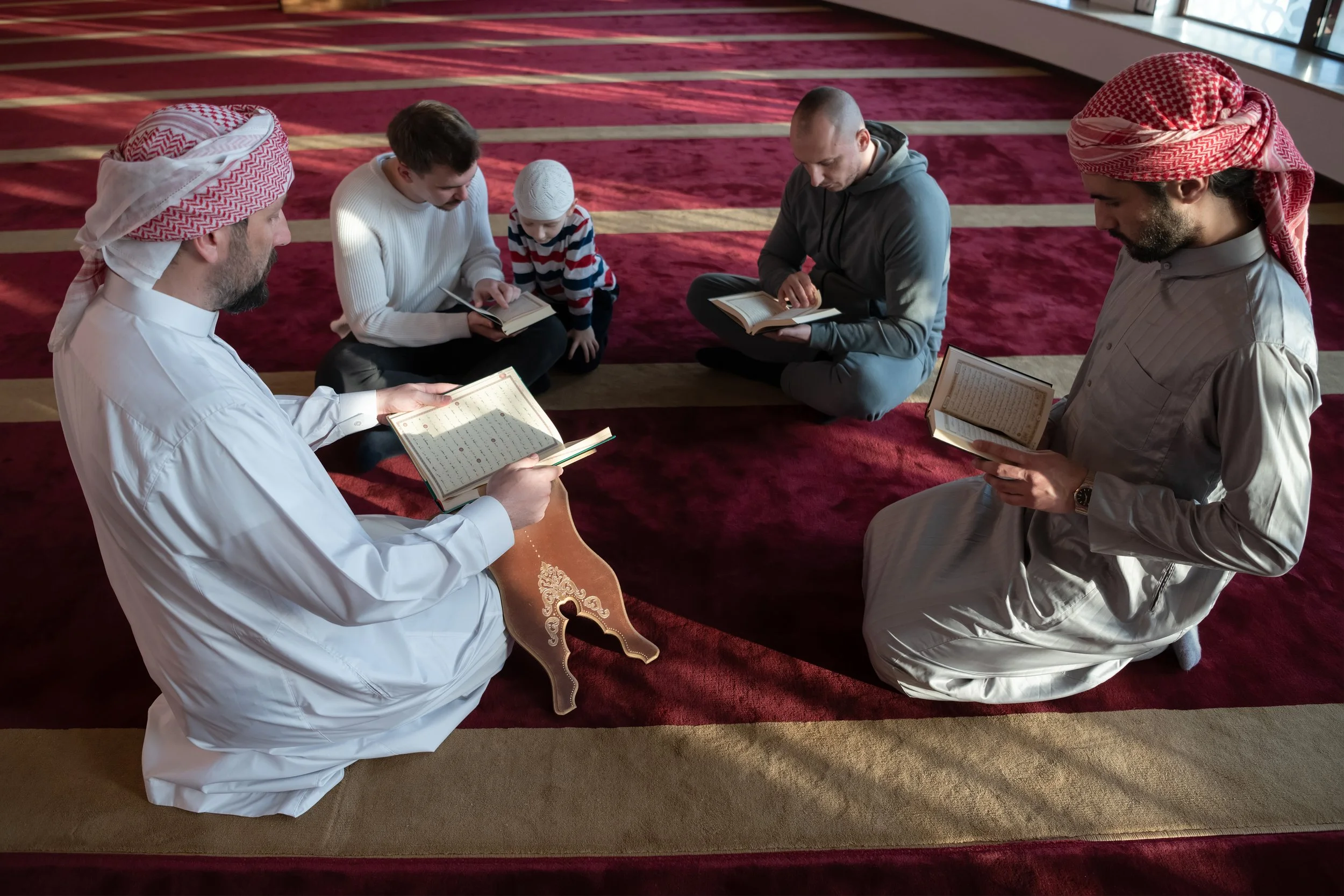
The UEF New Muslim Mentorship Program helps reverts (new Muslims) learn and live Islam with guidance, companionship, and community connection.
Our model is inspired by المُؤَاخَاة (Mu’akhah), the Prophetic tradition in Madinah where the Prophet (PBUH) paired new Muslims with supportive companions who taught, encouraged, and helped them integrate into the community.
As a mentor, you’ll play an important role in helping someone new to Islam grow in faith and confidence, step-by-step, at their own pace.
What You’ll Do as a Mentor
Walk alongside a new Muslim through their early learning journey.
Teach basic acts of worship (wudoo, salah, purification, etc.).
Explain Islamic beliefs and daily etiquette from The New Muslim Guide.
Encourage consistency, sincerity, and gradual growth.
Help them feel part of the UEF community by attending gatherings together.
Check in weekly or biweekly (in person or online).
Each mentee is paired with two mentors (same gender) for balanced support and shared accountability.
How the Program Works
Training & Support
Before being matched with a new Muslim, mentors attend a short orientation led by the Program Coordinator. You’ll learn about:
Teaching with The New Muslim Guide
Basic fiqh of purification, prayer, and belief
Good communication and cultural sensitivity
When to refer questions to the Imam
Using empathy and gradual teaching
You’ll never be alone. The Coordinator checks in every two weeks to see how things are going and offer support as needed.
In addition, mentors will participate in a bi-monthly Mentor Huddle to share lessons learned, best practices, challenges, and ideas for improvement as a group.
Team-Based Mentorship
Each new Muslim is paired with two mentors . You and your partner can alternate or co-lead lessons.
This approach provides:
Consistency (if one mentor is unavailable)
Shared insights and balance in teaching
Stronger connection for the mentee
✅ Separate mentor teams for brothers and sisters.
✅ Same-gender pairing for comfort and proper boundaries.
Community Integration
Mentors are encouraged to bring mentees to:
Friday prayers and UEF classes
Eid and weekly community gatherings
Volunteer opportunities and small group circles
The goal is to make every new Muslim feel at home, connected, supported, and seen.
Program Duration
Most mentorships last 3–6 months, depending on the mentee’s pace. After completion, mentees are encouraged to stay active in the community and may even become future mentors.
Check-Ins & Accountability
The Program Coordinator checks in biweekly with mentors.
No long reports; just short updates on progress or challenges.
Religious or sensitive questions go directly to the Imam.
The goal is to support mentors, not burden them.
Who Can Be a Mentor?
Becoming a mentor is a noble role. You are helping someone take their first steps as a Muslim. To ensure every new Muslim receives proper guidance, we ask that all mentors (Brothers and Sisters) review the following criteria:
1. Islamic Foundations
You should have a basic but solid understanding of:
Wudoo’ (ablution)
Salah (prayer)
Core beliefs (pillars of Islam and Iman)
Basic fiqh of purification, daily practice, and manners
You do NOT need to be a scholar. You only need to know the basics correctly and be willing to refer uncertain matters to the Imam and/or Program Coordinator.
2. Good Character & Islamic Conduct
A mentor should be stable in their own practice. This includes:
Praying the five daily prayers
Observing Islamic modesty (including hijab for sisters)
Speaking honestly and kindly
Showing patience, humility, and empathy
Treating mentees with respect and gentleness
Being reliable and following through on commitments
Mentors do not need to be perfect; just sincere, practicing, and someone a new Muslim can safely look up to.
3. Upholding Qur’an & Sunnah
All mentoring, advice, and teaching must follow:
The Qur’an
The authentic Sunnah
The understanding of the early scholars (Ahl al-Sunnah wal-Jamā‘ah)
No personal opinions or cultural practices should be passed as religious rulings.
4. Communication & Emotional Skills
A good mentor is someone who:
Listens attentively
Explains things in a simple, encouraging way
Maintains appropriate boundaries
Offers support without judgment
Encourages gradual growth, not overwhelm
5. Commitment to the Program
Mentors should be able to:
Meet with their mentee weekly or biweekly or on a consistent basis
Work together with a co-mentor (2 mentors per mentee)
Provide brief progress updates to the Program Coordinator
Accompany mentees to UEF events when possible
Be consistent for at least 3–6 months
6. Teamwork & Accountability
Mentors must be willing to:
Work as part of a mentor pair
Cooperate with the Program Coordinator
Seek guidance from the Imam and/or Program Coordinator when needed
Maintain confidentiality and professionalism
Ready to Become a Mentor?
If you have patience, sincerity, and a desire to help others grow in Islam, we’d love to have you on the team.
Note: This is a volunteer (non-paid) opportunity intended for those who wish to serve and give back for the sake of Allah.